


Many offices today rely on a simple “flat” network. Everything—CCTV, staff Wi-Fi, and servers—is plugged into a single, unmanaged system. At first, it seems fine. But the moment one person downloads a large file, or a cheap switch experiences a broadcast storm, the entire office network can crash.
This isn’t just inconvenient—it can cost time, productivity, and revenue.
The Hidden Risks of Flat Networks
Flat networks may appear easy to manage, but they come with serious limitations:
- One weak link can bring everything down
- Traffic congestion affects critical apps like video calls or file sharing
- Security risks increase when devices share the same network segment
- Troubleshooting becomes slow and complicated
Offices relying on flat networks are essentially leaving downtime to chance.
A Smarter Solution: 3-Layer Network Architecture
The answer is a structured, three-layer network design, often called the Core-Aggregate-Access model. This approach separates the network into three distinct layers, each with its own purpose:
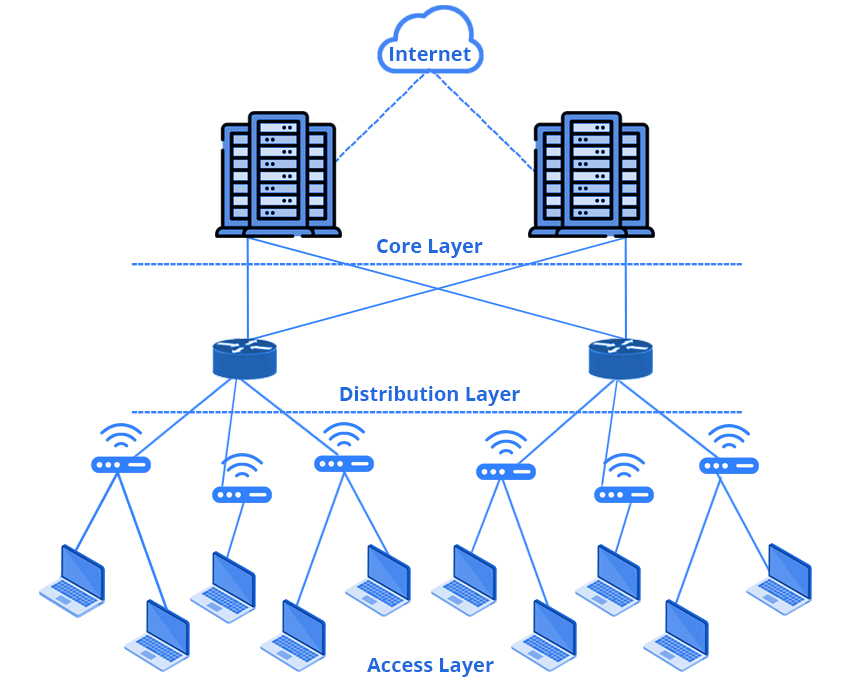
1. Core Layer – The Backbone
The Core Layer is responsible for high-speed routing. It acts as the highway for all your data, ensuring low latency and high throughput.
When designed properly, this layer prevents bottlenecks that can slow down the entire office.
2. Distribution Layer – Traffic Management
The Distribution Layer manages connections between different network segments. Using VLANs and traffic policies, it ensures that CCTV, Wi-Fi, and server traffic do not interfere with each other.
Essentially, it organizes your network so that each service gets the resources it needs without conflict.
3. Access Layer – Device Connectivity
The Access Layer connects end devices like computers, VoIP phones, and CCTV cameras. Power over Ethernet (PoE) allows devices to receive power and data through a single cable, keeping things neat and reliable.
This layer ensures every device stays connected, powered, and ready for use.
Why a 3-Layer Network Matters
A well-designed 3-layer network transforms office connectivity:
- Minimizes downtime and avoids crashes
- Prioritizes critical applications, like video conferencing or cloud services
- Simplifies troubleshooting when issues occur
- Supports future growth without costly rewiring
Offices that adopt this architecture experience smoother operations, more reliable connectivity, and increased productivity.
Take Action: Upgrade Your Network Before Downtime Strikes
If your office network is still “flat” or struggling with slowdowns, now is the perfect time to assess and redesign your network.
Even small changes—like segmenting traffic, upgrading switches, or implementing PoE—can drastically reduce downtime and improve productivity.
A professional network design ensures your systems stay connected, secure, and ready for the demands of modern work. Don’t wait for a crash to force a change—plan for a zero-downtime office network today.